Friday, January 30, 2015

Tracking Public Health

Birth Defects throughout the Nation

How do we know how many children are born with birth defects? How is this data collected?

   The Center for Disease Control and Prevention handles tracking of particular diseases and health concerns.  The part of the CDC that mostly deals with tracking this data is the National Environmental Public Health Tracking Network.  This branch uses many different forms of research to collect this data for the nation.   Particularly for birth defects, the two most common forms of data collection are active and passive.  The active form of data collection involves professionals in public health or health care going to hospitals in search of records and data.  Passive data collection is when the doctors or hospitals send out their records to public health databases such as this one.  
   This sounds like a lot of work on either end of the job, depending if the hospital is sending records or if the public health organization is going in search of the information.  Due to this labor, only 42 out of the 50 states are currently involved in tracking birth defects.  Along with the work involved, not all birth defects are known.  Due to this, only data for 12 birth defects are currently available on the national data website.  A few of these defects include cleft lip, Down syndrome, and spina bifida.  Although the data is not fully complete, these statistics give a good idea of what birth defects are most common and allows for the continued research for causes of these defects.

How does this effect me?

  Although you may not think this effects you now, but this data is very important for the future of this nation.  There are many people that are parents currently or want to become parents later in life that have to understand the risks along with having children.  It's important to look at research and data, such as this, to learn about the complications that could occur with pregnancies.  Although it is not fully understood yet, there are many environmental factors that could lead to birth defects.  For example, there has been a link between chemical exposure and nervous system defects in the baby.  This is something that will effect the population for the rest of history, so it's important to be aware and conscious about behaviors.  


Sources:

National Environmental Public Health Tracking Network
   http://ephtracking.cdc.gov/showCollectingBDData.action 

Friday, January 23, 2015

Everything You Need to Know About Poison Control Centers

Poison Control Centers

What is a Poison?

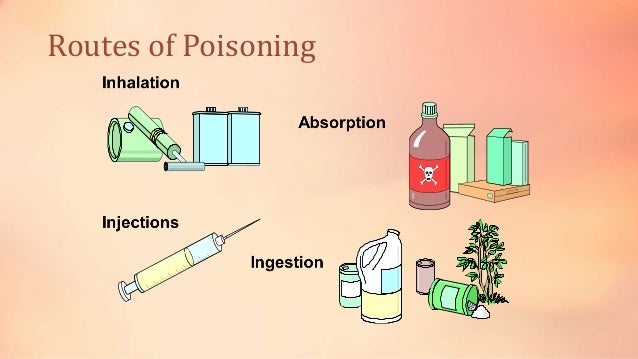
     A poison can be anything when used inappropriately.  There are many things that are completely safe when used properly; there becomes an issue when the product is used in the wrong manner.  If someone uses something, such as a medicine, that doesn't belong to them or they use it in the wrong dose, this could become a poison.  Although not all poisons are related to misuse, there are many substances that are just dangerous in any amount due to their nature, such as carbon monoxide.  Not all poisons are gasses though, poisons come in many forms such as solids, liquids, and even sprays.  

What are Poison Control Centers? Why would you need one? 

     Poison Control Centers are used in case of an emergency when you don't know if you or someone else has come in contact with a harmful product or situation.  These centers have 24-hour hotlines that are always available to offer assistance over the phone.  The universal hotline is 1-800-222-1222, which will direct you to the local poison center near you.  The local poison center for Ohio is located in Nationwide Children's Hospital in Columbus.  Even if you think that you may never need it, this number could save someone's life.  This is a free service that could replace a costly emergency room visit if there is an at home treatment for your situation.  Although there is a hotline, there are also locations that are available to visit if necessary.  
   There are many reasons that you may need to call or visit a Poison Control Center.  Many common situations that people encounter include concerns that their child got into something, food poisoning, chemical spills, concern about drug interactions, pet poisoning, etc.  The hotline is an important resource that could be used to answer a simple question or even point you to the hospital if professional assistance is needed.  Don't be afraid to call at anytime, these are trained professions that will help talk you through any situation.  If there is an uncertainty, don't hesitate to call; better safe than sorry. 


Sources:

   US Department of Health & Human Services
          http://poisonhelp.hrsa.gov/poison-info/what-is-a-poison/index.html 

   National Capital Poison Center
          http://www.poison.org

   American Association of Poison Control Centers
          http://www.aapcc.org/centers/?states_served=OH&local_center_submit=Search#search

Friday, January 16, 2015

What is Environmental Health?

What is Environmental Health?

  What is the first thing you think when you hear 'environment'?

         You maybe think of trees, plants, animals, or even recycling.  These are many factors that are all part of the environment or have an impact on the way the environment works together.  Based on the definition from Merriam-Webster Dictionary, the environment is "the conditions that surround someone or something."  Although you may have thought of more specific things when thinking about the environment, everything that you thought of is a part of our environment.  So basically, the environment is everything around us at any given time.

  What do you think when you hear the word 'health'?

          The first thing I think of is being sick, going to the doctor, and taking care of my body.  There are things that go into keeping your body as productive as possible, wether it be exercising or taking vitamins everyday.  Although none of these are wrong, Merriam-Webster Dictionary defined health as "the overall condition of someone's body or mind."  This definition includes everything that you could think of related to the physical or emotional health of your body.

   How do we relate the environment to health?

          After defining those two separate words, we may have a better understanding of what environmental health is when we combine their meanings.  Just to remind us, environment is what surrounds someone or something, and health is the physical or mental state or an individual.  Environmental health deals with how the environment affects the health of those that live in that environment, and how those living in that area affect the environment.  This idea of environmental health isn't a one way street, people change the way the environment works, and the environment changes how people live.  The study of environmental health examines how both people and the environment are able function together.  Overall, those that study this topic are trying to find the best way to allow us as humans to take care of the environment around us.  They are also studying how to prevent any further damage of the environment that could affect the health of future generations.


Sources:
     National Library of Medicine:
          http://kidsenvirohealth.nlm.nih.gov/generic/11/what-is-environmental-health
     Health, Environment, & Work:
          http://www.agius.com/hew/resource/envhlth.htm
     World Health Organization:
          http://www.who.int/topics/environmental_health/en/
     Merriam-Webster Dictionary
          http://www.merriam-webster.com